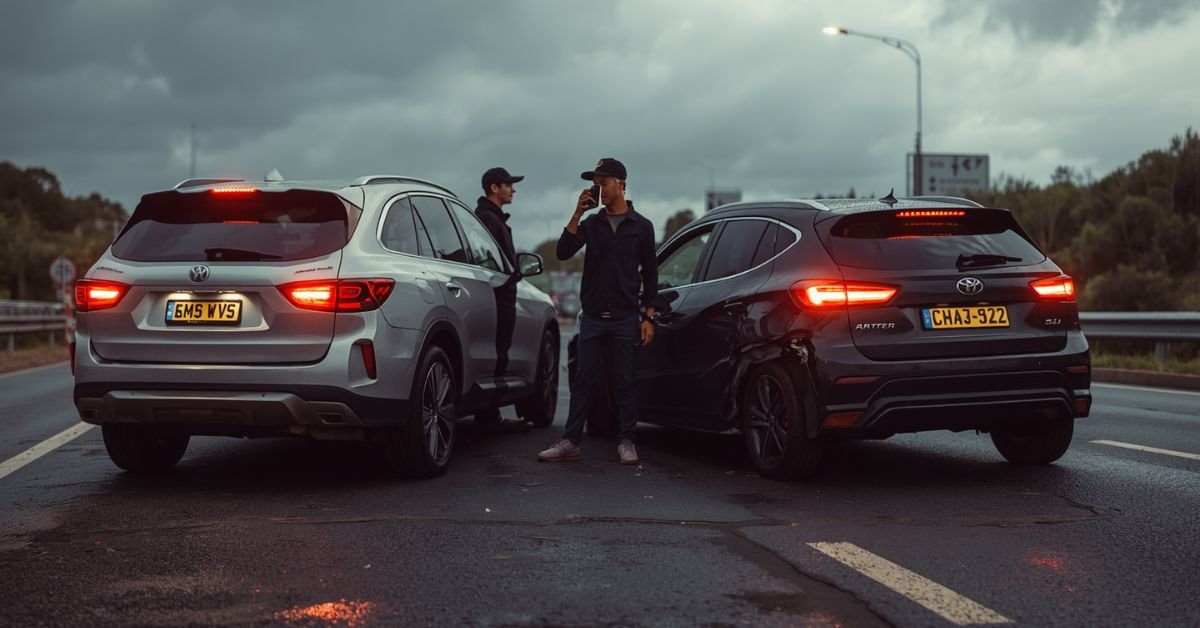

Nobody plans for a car accident. One moment you’re driving along the Princes Highway or through Wollongong’s suburbs, the next you’re sitting on the side of the road trying to figure out what to do next.
If it’s happened to you — or you want to be prepared in case it does — here’s exactly what you need to do after a car accident in the Illawarra, in the right order.
Step 1: Check for Injuries — Yours and Everyone Else’s
Before you think about the vehicles, insurance, or anything else — check yourself and your passengers for injuries. Then check the other parties involved.
If anyone is injured and needs medical attention, call 000 immediately. Don’t move someone who may have a neck or spinal injury unless there’s an immediate danger (like fire) that makes it necessary.
Even if you feel fine right after a crash, adrenaline can mask pain. Some injuries — particularly whiplash and soft tissue damage — don’t become obvious for hours or even days. See a doctor after any significant collision, even if you feel okay.
Step 2: Move to Safety if Possible
If the vehicles are driveable and the accident is minor, move them out of the active travel lane and onto the shoulder or a nearby side street. A car sitting in a travel lane creates a real secondary accident risk — especially on busy roads like the Princes Highway or Flinders Street.
If a vehicle can’t be moved, turn on your hazard lights immediately. If you have them, place warning triangles or flares behind the vehicle to alert approaching traffic — particularly important on higher-speed roads in the Illawarra.
Step 3: Call the Police
In NSW, you must report a car accident to police if:
- Anyone has been injured (no matter how minor it seems)
- Any driver fails to stop or exchange details
- A government vehicle is involved
- A crash involves a hit and run
Even for accidents that don’t legally require a police report, it’s a good idea to call and at least get an event number. This helps significantly with insurance claims later.
If there are injuries or the road is blocked, call 000. For non-emergency reporting, call the NSW Police assistance line on 131 444.
Step 4: Exchange Details
If the accident involves another vehicle, you are legally required to exchange details with the other driver. This includes:
- Full name and address
- Driver’s licence number
- Vehicle registration number
- Insurance details (company and policy number)
Don’t admit fault, apologise, or make any statements about who caused the accident at the scene. This is for your insurer and, if needed, the courts to determine — not the roadside conversation.
Step 5: Document the Scene
Before any vehicles are moved (if it’s safe to do so), take photos and video of:
- All vehicles involved and their positions on the road
- Damage to every vehicle
- The road layout, any skid marks, debris, or relevant road signs
- Any visible injuries (your own, not the other parties)
- Weather and road conditions if relevant
- The other driver’s licence plate
Get the names and contact details of any witnesses — passengers in other vehicles, pedestrians, or nearby residents who saw what happened. Their accounts can be valuable if there’s a dispute.
Step 6: Contact Your Insurer
Notify your insurance company as soon as possible — ideally the same day. Most policies require prompt notification, and delays can create complications with your claim.
When you call, have ready:
- Your policy number
- The event or report number from police (if applicable)
- Details of the other driver and vehicle
- Your photos and documentation
Your insurer will guide you through the claim process and advise on approved repairers and towing arrangements.
Step 7: Arrange Towing if Your Vehicle Can’t Be Driven
If your vehicle is damaged and can’t be driven safely, you need a tow truck. A few important points:
Check your insurance first. Many comprehensive policies include emergency towing cover. If yours does, contact your insurer for their recommended towing provider before calling anyone.
Be careful at accident scenes. Unfortunately, predatory towing is a real issue — particularly at accident scenes on major routes. Tow truck operators who arrive unsolicited and pressure you to sign forms at the roadside should be treated with caution.
Use a local, reputable operator. In the Illawarra, using a local Fairy Meadow or Wollongong-based towing company means faster response, knowledge of local roads, and a business accountable to its local reputation.
At Express Towing, we provide emergency towing across the Illawarra — from accident recovery on the Princes Highway to roadside assistance throughout Wollongong and surrounding suburbs. We’re a local business, licenced and insured, and we handle post-accident towing properly.
Step 8: Arrange Alternative Transport
Once the vehicle is sorted, you need to get yourself (and any passengers) home or to where you need to be. Make sure this is arranged before you’re standing alone on a roadside.
If anyone has been taken to hospital, contact family or friends to meet them there. Don’t try to drive to the hospital yourself if you’re shaken up — call someone.
Common Mistakes After an Accident in the Illawarra
Leaving the scene without exchanging details. This is a serious offence in NSW, even for minor accidents.
Admitting fault at the scene. Your assessment of what happened may be incomplete. Let the facts and the insurers work it out.
Not calling police when you should. If anyone is hurt or a driver leaves without exchanging details, you must report it.
Signing documents you haven’t read. At a towing scene, don’t sign anything until you understand what you’re agreeing to.
Not documenting the scene properly. Photos from the scene are far more valuable than descriptions from memory.
Need Emergency Towing in the Illawarra Right Now?
If you’ve been in an accident and need a tow, Express Towing is available for emergency towing across Wollongong, Fairy Meadow, and the broader Illawarra region.